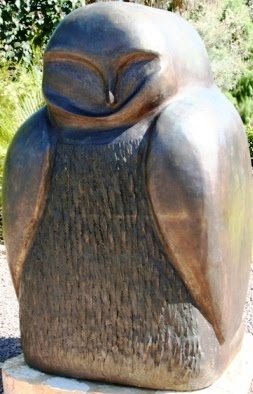
Welcome to longlines. Notes, photos and articles from Europe, America, the Middle East, Australia and the Pacific will be posted here. All comments are welcome.

Wednesday, May 2, 2012

Day Dreaming in Morpeth


Morpeth in New South Wales probably never had a hope of becoming the great port that its rival in the 1800s, Newcastle, eventually achieved.

This picturesque town on the high bank of the Hunter River, 34 kilometres by road from Newcastle, but a much longer journey along the winding river, overlooks a verdant valley.

Lieutenant Close selected land at Morpeth in 1821 and by the 1830s the town was thriving as a river port.  At its peak Morpeth boasted 18 inns which provided accommodation and refreshment to the sailors, bullockies and other tradesmen who frequented the town. 

In Morpeth’s early years there were probably great stands of cedar growing along the river valley.  This timber was harvested to build the homes of the Sydney gentry.  During this period coal was still being shovelled straight from riverbanks onto the ships of entrepreneurs out to make a fast buck from the region, while official mines were being established around Newcastle.

The Newcastle and Hunter River Steamship Company established regular services from Morpeth to Newcastle and Sydney and freighters and passenger vessels plied between these ports throughout the 19th century.

On 10 December 1831 the Australian Agricultural Company officially opened Australia's first railway which did not service Morpeth.  Two years later, on 3 May 1833 the same company received land grants at Newcastle and a 31 year monopoly on that town's coal traffic.  These developments in Newcastle and the deforestation of the valley led to Morpeth’s eventual decline as a trading port.

Enthusiastic and ambitious public building projects continued in Morpeth until the late 1800s providing the town with a legacy of fine buildings. 

Autumn deciduous trees and the crispness of the upland air enhanced the soft light of the change of seasons in this village which cloaks its boisterous beginnings in genteel arts and crafts shops and fine wine and food merchants.

As we strolled along Swan Street after indulging in a gourmet pizza and after sampling the fine wines of the Morpeth Moonshine Distillery and Wine Cellar the temptation to set up a Wordsworthian existence in one of the town’s quaint backstreets was only overcome by the harsh reality of a paid-for but non- refundable ticket out of New South Wales and the knowledge that Australia boasts few financially independent poets.

Claire Wood
Email:  longline8@gmail.com
Wednesday 2 May 2012

Thursday, May 26, 2011

Almost Home, Kakadu revisited

Brisbane Flood January 13 2011

Nankeen Night Heron
Lotus in Flower Kakadu
When the first Darwin blog was published on November 24, 2010 I did not realize that within a few months I would have had a dramatic lifestyle change and be living within a couple of hours drive of the home I had left many years ago. 
 
This past wet season was one of the wettest on record. The floods which began in northern Australia in November moved slowly south and Brisbane was inundated on 13th January.  Enquiries into the flood and its aftermath are currently underway in various parts of Queensland.
 
Victorians also counted the losses from floods while those people who live at the mouth of the Murray saw the river in an entirely new light as it flowed to the sea for the first time in decades.

While the East Coast was flooding the West was fighting bushfires and it seemed as we travelled north into two cyclones in one week that this country, blessed as it is, must suffer natural disaster to counterbalance the many social, political and economic benefits that it has to offer.

However our natural disasters became part of a series affecting the Southern Hemisphere when floods hit South America followed by a devastating earthquake in Christchurch.

The Japanese earthquake and tsunami demonstrated that we truly are global. The worldwide effects from this disaster will not be known perhaps for years to come.

And now the latest series of tornadoes in the United States unites us in sympathy for all those who this year have suffered in natural disasters.

Brumby, Eagle, Ibis, Jabiru Nest, Kakadu
Jabiru and Crocodile compete for fish carcase
 It was not only natural disasters that occupied the news but also the outburst of unrest across the Middle East.

The atmosphere of freedom of speech and action that is taken for granted in this country was a tonic when contrasted to the situation  in those Middle Eastern countries. 

I delighted in the sight of people dressing how they liked. It was wonderful to know that in the eyes of the law the man driving the garbage truck, the woman cleaning the toilets in the shopping centre, the young man covered in tattoos sleeping in the back of his battered ute and the very young mother trailing her tribe of children against the “don’t walk” sign not only enjoyed the same rights and protections as the highest in the land, but took those rights and privileges for granted.

One of the pleasures of arriving north of the Tropic of Capricorn during the Wet Season was the abundance of birdlife, particularly waterbirds, shorebirds and waders.

Eagles performing aerobatics
Little Egret, Kakadu
It was the abundance of birdlife that made the visit to Kakadu late last August so memorable.
Kakadu National Park, a UNESCO World Heritage listed site, holds a special place in the hearts of many Australians. The size of a small European country it has been continuously occupied for at least 40,000 years and the quantity and quality of Aboriginal cultural sites within it reflect this long occupation.

Kakadu extends along the Northern Territory coast from the mouth of Wildman River to the mouth of the East Alligator River and includes Barron and Field Islands. Nitmiluk National Park is on its south west border. Kakadu surrounds the controversial Jabiluka and Ranger Mineral Leases and the Koongarra Mineral Lease.

Arnhem Land, largely closed to visitors, is on its eastern boundary.

Graceful Egret
Crocodile and Burdekin Duck, Kakadu
Pied Heron, Kakadu
Entire libraries of books have been written about Kakadu, about its culture, flora, fauna, geology and complex history.

Any search on the Web will bring up numerous sites littered with extravagant visuals and a depth of information.

Because of the long and late Wet season earlier in the year Wurrgeng, the cool weather season (of the six seasons of Kakadu) was still on the land and made for easy travel.

Yellow Water and Nourlangie Rock were the highlights of the trip, although the size and numbers of crocodiles that inhabited every body of water left a lasting impression.
Yellow Water Cruise Boat

The Yellow Water wetland cruise is conducted by professionally trained and enthusiastic wildlife guides who respect not only the environment and its inhabitants, but also the visitors, many of whom have travelled around the world for this experience.

 
My visit after a long absence was brief, a side trip from the main purpose of my journey, but a trip that left me determined to return and spend more time in this beautiful and complex area.
Darter with fish catch Kakadu


Claire Wood

Observer
Monday, May 9, 2011
Longlines - http://longline8.blogspot.com/
Email: longline8@gmail.com
Follow me on twitter: http://twitter.com/longlinesBlog

Crocodile & Whistling Ducks Kakadu

Wednesday, November 24, 2010

Darwin Revisited

I cannot rest from travel: I will drink
Life to the lees: all times I have enjoyed
Greatly, have suffered greatly, both with those
That loved me, and alone; on shore, and when
Through scudding drifts the rainy Hyades
Vexed the dim sea: I am become a name;
For always roaming with a hungry heart
Much have I seen and known; cities of men
And manners, climates, councils, governments,
From ‘Ulysses’, Alfred, Lord Tennyson

South end of Mall facing Waterfront
Unlike Ulysses most people can rest from travel. However before the ‘rest from travel’ are the places on the journey which are strung together like beads on a string. These places often have nothing in common. It is as if the string of beads had been fashioned by a mad, wayward child - precious stones and bits of rubbish collected and randomly strung together.

Darwin is a bead on the string of my journey. It is a small complex nugget that changes with the light, the angle of vision, the seasons.

Australia’s northernmost city does not face north to Beagle Gulf and beyond to the Timor Sea. Situated on the end of a south facing peninsular Darwin is tucked into Darwin Harbour. The harbour is approximately 20 miles (32 kms) long with several deep arms branching from the main body. It is such a vast and complex environment that a twelve day fishing tour offered by a local company does not guarantee more than a taste of the area.

Twenty years ago the last journey through Darwin was to enter Australia with eight suitcases and two children, the noise of the crowded marketplaces of Asia still echoing in our minds. Beyond the airport perimeter Darwin lay sweltering and abandoned in the buildup to the Wet. As we exited the plane onto the tarmac, perspiration sprang from our pores. Within seconds we were saturated. The air was so thick each breath was like inhaling hot soup.

Public Art Darwin
Darwin during the Dry season is a different town. Darwin two decades later is also a different town. It still straggles around the peninsular, its multiracial inhabitants are still friendly and easygoing. But the city’s population has almost doubled. Taxi drivers are now long term residents, not geologists, anthropologists and archaeologists waiting for the next mining boom. And public art litters the sidewalks and parks. Like many northern Australian towns, time has been kind to Darwin, and tourism even kinder.

This is a town rich in history, with layers of occupation going back at least forty thousand years. It is a town that sits lightly on its foundations. The few remaining historic buildings have been rebuilt after the ravages of disease, wartime bombing and cyclones.

Darwin mall - criticised when it was first opened as being inappropriate for the climate, considered a
‘southern’, alien development - is crowded. People sip coffee al fresco, wander through the art and souvenir shops, photograph each other outside the historic Victoria hotel.

In 1888, Ellen Ryan, one of the richest people in the Northern Territory contracted a local builder to begin work on the North Australia Hotel . It’s name was changed six years after opening to the Victoria. The Vic Hotel was the first building in Darwin constructed from the local multi-coloured porcellanite stone. The hotel has survived several cyclones, the bombing of Darwin and rioting between occupying forces during the Second World War.

It has been a focal point for political and social activity throughout the past 120 years of history in the Territory. In 1908 the first motorists to cross Australia from south to north stayed at the Vic and in 1915 with political turmoil and union unrest threatening what eventually culminated in the Darwin Rebellion, the Vic and several other hotels were ‘nationalised’ by the Northern Territory Administrator.

Darwin Mall
In 1920 Ellen Ryan sold the hotel to Christina Gordon who turned it into a first class hotel and required men to wear jackets in the dining room. As air routes between Australia and the Northern Hemisphere developed the Vic hosted most of those involved. In 1919 pilots from the England to Australia air race stayed there as did those that followed during the pioneering days of air travel.

During the Second World War United States and Australian naval personnel stayed at the hotel, which was damaged during riots by troops stationed in Darwin in 1941.

On 19 February 1942 the same Japanese fleet that bombed Pearl Harbour in Hawaii bombed Darwin. More bombs were dropped on Darwin than on Pearl Harbour and at least 243 people were killed and the entire town damaged. Further bombing on the town continued but the Victoria Hotel suffered little damage.

In 1946 the hotel was sold to the Lim family who operated it until 1965. During that period crocodile shooters, buffalo hunters and mining prospectors took over as the main customers of the hotel.

On Christmas Day 1974 the hotel lost its roof for the third time to the third major cyclone in the hotel’s history when Cyclone Tracey destroyed or damaged 95% of the city and killed 71 people.

As the entire town had to be rebuilt after Tracey it was four years before the Vic was reopened.

Victoria Hotel Darwin
Today the hotel hosts many of the huge numbers of tourists who have discovered the Top End over the past decade.

From the Vic in the mall it is a short walk to The Esplanade.

On the walk to The Esplanade a visit to Lyons Cottage is a pleasant diversion. Built in 1925 it was originally home to the company engineer of the Eastern Extension Australasian and China Telegraph Company Ltd. This company was the successor to the British Australian Telegraph Company (BAT) and laid cable between Australia and Java.

Lyons Cottage was built in stone – a wise decision in a white ant infested and cyclone prone area.

Today it displays historical photos of Darwin and houses an Aboriginal crafts association that sells handicrafts from around the region.

The quality and beauty of the items on sale evoke a surge of regret at the very small bag that, of necessity, accompanies me on this trip.

Mementoes of Aviation Link to Victoria Hotel Darwin
The professionalism of the staff, their open friendly manner are a wonderful welcome back to the area.

Memories of stays in Darwin over several years flood back as I walk down to the refurbished Esplanade.

Right along the Esplanade from Knuckey Street and the Novotel Atrium hotel is a block away. The clear sky and the sparkling water of the harbour are overlaid by memories of watching from the then Atrium Hotel huge thunderheads sweep across the harbour. They heralded violent thunderstorms that culminated in evening lightning displays that seemed to crack the night apart. Below, along the beach, crocodiles were reported to sun themselves or go for forays into the harbour.

Today the number of people using the beach and park area would not encourage any crocodile save the most foolhardy to slide up onto the beach.

On the point, bounded by Herbert Street and Harry Chan Avenue are places that have been the site of events that changed the course of history of the area.
Lyons Cottage Darwin

In 1869 Charles Darwin had become an unpopular figure in England and when George Goyder, Surveyor-General of the Colony of South Australia, arrived in a coastal barque to establish a new settlement he re- named the area "Palmerston", after that great believer in gunboat diplomacy and forced Irish emigration, the then late Lord Palmerston.

Fortunately for all, except of course the 500 Larrakia people who were displaced by Goyder when he established the site of the settlement, in 1911 the town reverted to the name of Darwin.

Observer
24 November 2010

Email: longline8@gmail.com
Follow me on twitter: http://twitter.com/longlinesBlog


Sunday, August 29, 2010

Interiors


Window
The architect I. M. Pei said, “...people do not stay outside looking at buildings when it is hot ... .[In the Arab world]. ..exteriors are severe, [but the] interiors [are] ... beautiful ... a remarkable variety of patterns and lighting.’

Pei’s touch is always light, his historical references always subtle.  As Oliver Watson says, Pei’s design is ‘accessible ... to those who know about history, and to those who do not...’

The Museum seems to glitter in the mid-day heat.  Instead of an external dome the building is topped by a cube reminiscent of the Middle Eastern wind tower.

In countries where wood suitable to use for spanning large spaces was unavailable, where brick, stone and marble were the building materials, the arch and the dome dictated the development of architecture.

Pei has used the arch to emphasize, not interrupt, the planar exterior of his building design and as a subtle reminder of its architectural heritage.  The simple roman arch, the horse shoe arch, the delicate pointed arch that for many is identified with Islam, all are traced lightly on the external surfaces.

Shadows at Entrance to Museum
It is only the slit like modernist elliptical arches cut into the tower that offer relief from the glare.  Deeply shadowed they are like the eyes of a warrior, protected by a helmet.

Fountain in atrium
At the museum entrance the perspiring visitor treads through bars of shadows that pattern the ground, walks through the massive glass doors and is halted by the shock of the interior. 

The momentary suspension of sensation lifts.  The skin cools, eyes adjust to the absence of glare, voices welcome the visitor.

Beyond the shadowed reception area is a light-filled atrium space, partly illuminated by a 45 metre-high tinted glass window revealing the salt-laden Gulf that surrounds Qatar on three sides.

Looking up to internal faceted dome
The newcomer is immediately drawn to the window, but on looking back across the atrium realizes that there is no position from which this space looks best.  Through his use of stone, concrete, glass, steel and marble Pei has provided a sculptural space in which the visitor is enclosed by, and becomes part of, pattern and light and geometrical variety.

A black marble fountain delineates the space in front of the window. 

Beyond the fountain the eye is drawn upward to the stainless steel faceted internal dome through the oculus of which pours more daylight.

Chandelier below dome and over staircase
Here Pei has played with geometry.  “From circle to octagon to square to four triangular flaps that angle back at different heights to become the atrium’s column supports,” is the description given in Watson’s book.  Yet this array of shapes and angles soars away from the eye.  It is intriguing, never confusing; revealing not obscuring. 

Glass bridges connecting balconies
Below the centre of the dome the floor is inlaid with intricate patterns and a curved double staircase sweeps upward to the U-shaped balconies that are cantilevered around the atrium. 

Between staircase and dome hangs a circular ‘chandelier’ that glows even in this light filled space.

From the top of the staircase the light seems liquid and the glass bridges that connect the balconies become bridges of light on which human figures float in luminous streams.

There is time now, before entering the galleries, before departing this space to go back down the stairs, buy a coffee and sit at one of the tables overlooking the gulf, abandon all thought and merge into this radiance.

Observer
Sunday, 29 August 2010
Email: longline8@blogspot.com
Twitter: http://twitter.com/longlinesBlog

Ref:
Watson, Oliver, Museum of Islamic Art, Doha, Qatar, Prestel Verlag Munich.

Sunday, August 15, 2010

Light and Heat in Qatar

Qatar vies with Lichtenstein for the position as the richest country in the world. Sheikh Hamad bin Khalifa Al Thani, Emir of the State of Qatar, came to power through a bloodless coup in 1995. His accession was a turning point for the country. The Sheikh has proclaimed his intention to make his country a centre for culture and education. His second wife Sheikha Al Mayassa bint Hamad bin Khalifa Al Thani has been active in helping him achieve this goal. In November 2008 The Museum of Islamic Art in Qatar was opened.


Corniche Doha, Qatar

It is 10.30 in the morning. The temperature outside is 44⁰C with the promise of increasing heat. The plane thuds on to the tarmac and hurtles to a stop in the richest city on earth.

The passengers, oil workers and their families returning from shopping trips to the Emirates, disembark and charge into the dust and heat haze, leaving the lone tourist alone to savour the moment of arrival in a new city.

Parkland facing Museum of Islamic Art Qatar
The hotel shuttle bus driver seems bemused, but enthusiastic, at the idea of the city as a tourist destination.

The trip to the hotel through a tangle of streets lined with crumbling concrete buildings is blocked intermittently by orange and white plastic barricades. Behind these barricades crowds of indentured Asian labourers shovel dirt out of ditches.

The first impression of the city is that the Qataris cannot be accused of flaunting their extraordinary wealth, although
Doha, Qatar’s capital, does have the usual collection of odd-shaped glass-clad high rise buildings and a dust shrouded tower to celebrate the 2006 Asian Games.

On the southern tip of the crescent-shaped bay, at the end of the corniche along which the working men are not allowed to walk, is the jewel in Qatar’s crown.

What a jewel it is. The first sign that true progress has come to the country. The next day, the driver points out the new education and medical precincts - further proof that money is being spent wisely in this country.


But it is the breathtakingly beautiful Qatar Museum for Islamic Arts that has placed Doha on the international map.

This building is I. M. Pei’s design and proof that the creative process burns deeply and strongly to the end of the artistic life.

Entrance to Museum of Islamic Art Doha
I.M. Pei has many great projects in his portfolio, but is probably best known for his controversial upgrading of the Louvre precinct in Paris which opened in 1989.

The story of I. M. Pei’s quest for ‘the essence of Islamic architecture’ is told and re-told in the Middle East. Cordoba in Spain, Fatehpur Sikri in India, the Great Mosque in Damascus, the fort at Sousse in Tunisia, were visited by the architect,but none of these inspired him to begin his design. Finally he came upon the simple lines of an ablution fountain in a Cairo mosque and from this drew the inspiration for the Doha museum.

I. M. Pei's Museum of Islamic Art Qatar
The museum is located on a man- made island sixty metres from shore. It is a stripped back, almost minimalist design which does evoke images of the ninth century ablutions fountain in the mosque of Ahmad ibn Tulun in Cairo. But the building is more than an evocation of early Islamic architecture.

Pei has embraced the harsh light and heat of the Arabian peninsula.  The sharply defined facets of the building enhance the interaction not just of light and shade, but of variations of light and shade and the interplay of watery reflections.

As the temperature soars beyond 48 degrees, the water shimmers beneath heat waves, and the building invites the traveller to enter into a promise of a vast cool interior.
Museum of Islamic Art Qatar

Observer
16 August 2010
email:  longline8@gmail.com
Longlines - http://longline8.blogspot.com/


Saturday, July 24, 2010

Death, Religion and Family in Venice


The church of Santa Maria Gloriosa dei Frari (the Frari) was established in the 1230s. Within the church the three motifs threading through the lagoon’s history unite to reveal the uniquely Venetian aspects of death, religion and family.
Linked to the Frari collection is Titian’s Pièta in the Accademia Galleries in Venice. The Pièta is not only the culmination of a life of artistic work but a profound reminder of the transience of life and of the basic fear upon which the republic was founded.


Heliodorus the fourth century Bishop of Altinum retired with St Marcellus to live out his life on the lagoon island of Marcelliana. Heliodorus was only one of the many early Christian recluses who sought isolation on those low islands which offered a space for contemplation and prayer in the everchanging light between sky and sea, between East and West.

The hermits were followed by two waves of refugees fleeing death at the hands of invaders.

Settlements built in swamps are vulnerable to disease and environmental hazards.

In the centuries following the first refugee settlement in the lagoon, flooding destroyed some of the islands and silting of the channels encouraged mosquito borne disease. Outbreaks of malaria forced whole communities to relocate to other islands. When the settlers regrouped the communities which today make up Venice were established.


The hermit tradition encouraged a separation between Church and State. Wealthy families supported the work of monks and nuns, and the building of churches. As the Venetian community grew, political authority was developed so that no one family controlled the State.

However Venetian wealth and power was built on fragile foundations.

No sooner were the ravages of malaria brought under control than the first plague pandemic swept through Europe in 1346.

For the following 333 years Europe was subjected to waves of plague outbreaks. By 1400 the continent’s population had been halved by the disease which attacked in three forms. The most common form was bubonic which killed 80% of sufferers. The other two forms, septacemic and pneumonic, had almost a 100% death rate.

Albert Camus in his allegorical novel about the Nazi occupation of France describes the symptoms of bubonic plague:


Between 1361 and 1528 (part of the period of the second plague pandemic) there were 22 outbreaks of plague in Venice. During an outbreak between 1575 and 1577 fifty thousand (one third) of Venice’s inhabitants were killed by the disease.

At the end of the fifteenth century or the beginning of the sixteenth as another plague outbreak began to spread through Europe, ten year old Tiziano Vercellio (Titian) and his brother Francesca set out from their home village of Pieve di Cadore high in the Dolomite mountains to begin apprenticeships with the Bellini family in Venice.

By 1516 Titian was recognised as the master of Venetian painting, a position he maintained for the next sixty years.

His work for the church of the Frari was the foundation upon which his reputation was based.

Behind the plain, imposing late Gothic facade of the Frari is a classic Latin cross-shaped space filled with light.

Within the gilded frames and marble niches of the church are no idealised portraits of semi-divine creatures immersed in religiosity but strong, determined people existing in an uncertain world.


The saints are grounded in the reality of the artist’s times. Bernardino Licino’s group in Virgin Mary and Saints (1524) in which St Clare, austere and observant and St Francis, ironic and knowing, flank a concerned Bonaventura are good examples.  Giambatista Pittoni’s Hagar, vulnerable and weeping in Hagar in the Desert (18th Century) is another.


In Titian’s Assunta (1516-1518) the virgin, her body thickened by childbearing, her tragic life stamped on her features is absorbed, afraid yet resigned, into the afterlife. She may be being elevated to the divine but she remains a woman of the earth.
Titian’s touchingly young Madonna of Ca Pesaro (1519-1526) struggles to restrain her rebellious infant and, interrupted in her maternal duties, turns, polite yet impatient, to acknowledge the obeisance of the retinue of Jacopo Pesaro.

In the chapel of the Milanese Alvise Vivarini (1503) shows St Ambrose’s careworn face imbued with gentle concern. Bartolomeo Vivarini’s St Mark (1474) is alert to events beyond the frame as he raises a hand in an admonitory blessing.

Donatello’s statue of an emaciated St John the Baptist is formidable. Transfigured by self-mortification and dressed in animal skin John the Baptist raises a hand that does not admonish the viewer. It merely draws attention to this embodiment of the illusory nature of earthly reward, the fragility of body and mind, the inevitability of death and of whatever lies beyond.


Beyond the Presbytery and Chapels inside the Frari, the massive funerary monuments that line either side of the aisle are a reminder of how important death has been in Venice.

Titian was the only plague victim to be buried in a church, but his funerary monument was not erected until the 1850s.


His Pièta, unfinished when Titian died on 27th August 1576 was intended for the Frari. It is now in the Accademia and is a magnificent, awe inspiring work.


Gone are the glorious skies, the vivid colours of the Frari Madonnas.

Within the ruined claustrophobic space of the Pièta man confronts death at the outbreak of plague.  Reduced by age and the depredations of disease, he begs for eternal salvation, while Mary Magdelan gestures furiously at an inevitable fate.  The Venetian lion, helpless and turned to stone, grimaces in fear.

This is the end of the Venetian blogs for the time being. Dante, a Florentine, who used the image of the Venetian Arsenal to help describe Hell, will have the last word.


Observer
Sunday, 25 July 2010
Longlines - http://longline8.blogspot.com/
Email: longline8@gmail.com

References:
John Ruskin, The Stones of Venice, 1879, Project Gutenberg.
F. C. Hodgson, An Early History of Venice, 1901, Project Gutenberg.
Albert Camus, The Plague, Penguin Books 1947.
Dante Alighieri (1265-1321), The Inferno, www.worldofdante.org

Wednesday, July 7, 2010

Something to Consider

A computer crash has delayed the last of the Venice blog posts. for this I apologise. However in the meantime I recommend readers to look at the blogs I follow.

There is the gorgeous visual record of John and Gail Cross' travels and place of residence in 'John and Gail in UAE'. Then there is Ann Alcock's equally engaging yet totally different approach to photography in PhotoVoice Australia.

Margo Tesch in 'Spring Creek Station' gives the reader an insight into life in rural Australia. Jo Burton's snippets in 'Footloose with Jo' talk about life travelling and in Malta and are always thought provoking.

Make a cup of coffee and spend a bit of time reading Bryce Alcock's reflections on literature and the literary life in 'The Echidna and the Fox' and add to your wish list of reading matter at the same time.

Observer
Longlines - http://longline8.blogspot.com/